Choosing the right AI Shopify store builder can make it easier to turn an e-commerce idea into a working online store. But not all tools have the same features. While some concentrate on producing product descriptions, others assist in designing store layouts, product photos, branding, and entire storefronts.
Think about how much of the store-building process a tool can handle, if you can customize the outcome, and how well it meets your business objectives before selecting one. You should be able to keep control over your products, branding, and customer experience while reducing repetitive work with an efficient AI Shopify store builder.
1. Full Store Generation Capabilities
The first factor to consider is whether the AI tool creates a complete storefront or only helps with individual tasks. Some platforms generate text or design sections but leave you to assemble the remaining pages manually.
Look for a solution that can assist with key components, including the navigation, product pages, collection pages, homepage, and supporting material. For novices without prior web design abilities, this can streamline the process.
For example, a merchant launching a skincare store may need branded layouts, product descriptions, category pages, and clear product benefits. A tool that connects these elements can provide a more useful starting point than one that only generates a homepage.
Forge AI is designed to help merchants generate Shopify store elements through an AI-assisted workflow. You can explore its approach in this guide to AI Shopify store builders versus Shopify themes.
2. Customization and Design Flexibility
A store should reflect your brand rather than look identical to every other online shop. Make sure you can modify layouts, colors, fonts, photos, content, and product sections before choosing an AI builder.
Consider a premium jewelry business that needs an elegant appearance, while a fitness accessories store may require bold visuals and prominent product features. The right tool should support these different requirements.
Also check what happens after the initial generation. Can you edit individual sections, refine product pages, and update the design as your business develops?
Read how AI chooses the right layout for a Shopify store to understand why product type, audience, and brand identity matter when creating store layouts.
3. Product Descriptions and AI Content Quality
Customers are better able to understand what they are purchasing thanks to product content. Clear descriptions, feature lists, benefit statements, and pertinent supporting content should be simpler to develop using an AI shop builder.
For example, a backpack description should explain its capacity, materials, compartments, and intended use when that information is available. It should not invent waterproof ratings or durability claims.
Seek out technologies that allow you to edit and enhance content that has been generated. Forge AI is creating Shopify product pages with AI that explores the relationship between product information, presentation, and customer needs.
4. Product Images and Visual Content
High-quality images help customers evaluate products and understand how they look in real-life situations. Manually producing these images can be time-consuming, particularly if a store offers a variety of goods.
Verify whether image creation, image editing, banners, and other visual assets are supported by the AI builder. Check to see whether you may utilize your own photos if you already have product photography.
For example, a home decor store may benefit from lifestyle images that show products in a room setting. Still, generated visuals must accurately represent the real product, including its shape, color, and included accessories.
5. Search Visibility and SEO Features
An attractive store is not enough if potential customers cannot discover its products. Consider whether the builder supports essential SEO elements, including page titles, meta descriptions, headings, image alt text, and clean URLs.
Relevant search intent should also be addressed in product content. For instance, a store that sells reusable bottles ought to give customers precise product details and helpful information so they can evaluate their options.
Verify which SEO components need to be manually edited and which are generated automatically by the tool. Don't assume that employing AI will result in better rankings. Search visibility is influenced by a number of variables, including technical accessibility, competition, and content quality.
Google's SEO Starter Guide explains important practices for making website content easier for search engines to understand.
6. Essential Integrations and Shopify Compatibility
Make sure a tool supports your expected Shopify workflow before committing to it. Examine the store's connection to Shopify, what happens when you publish changes, and whether you can keep using the platform to manage orders and merchandise.
Integrations for payments, shipping, stocks, analytics, reviews, and marketing should also be taken into account. Your business strategy will determine the specific requirements.
A dropshipping business, for instance, may need supplier and fulfillment integrations, while a brand selling its own products may prioritize inventory management and shipping workflows.
Before selecting your builder, check the official Shopify online store setup guidelines to make sure any necessary integrations are accessible.
7. Pricing, Support, and Long-Term Value
The cheapest tool is not necessarily the most suitable. Examine subscription costs, usage limits, premium features, publication specifications, and any other apps you might require.
A builder that includes several useful capabilities may reduce the number of separate tools required. However, calculate the actual cost based on your needs rather than assuming every feature is included in one subscription.
For a broader comparison, visit the Forge AI store builder comparison hub and evaluate available options according to your requirements.
How Can You Choose the Right AI Shopify Store Builder for Your Business?
Determine your top priorities first: long-term value, Shopify compatibility, product content, image creation, design flexibility, SEO support, and full shop generation. Before committing, test the resulting output and compare tools to these specifications.
If you're looking for an AI-assisted workflow for building Shopify stores and the content that goes with them, Forge AI is one option to consider. Examine its features and confirm the generated store before publishing.
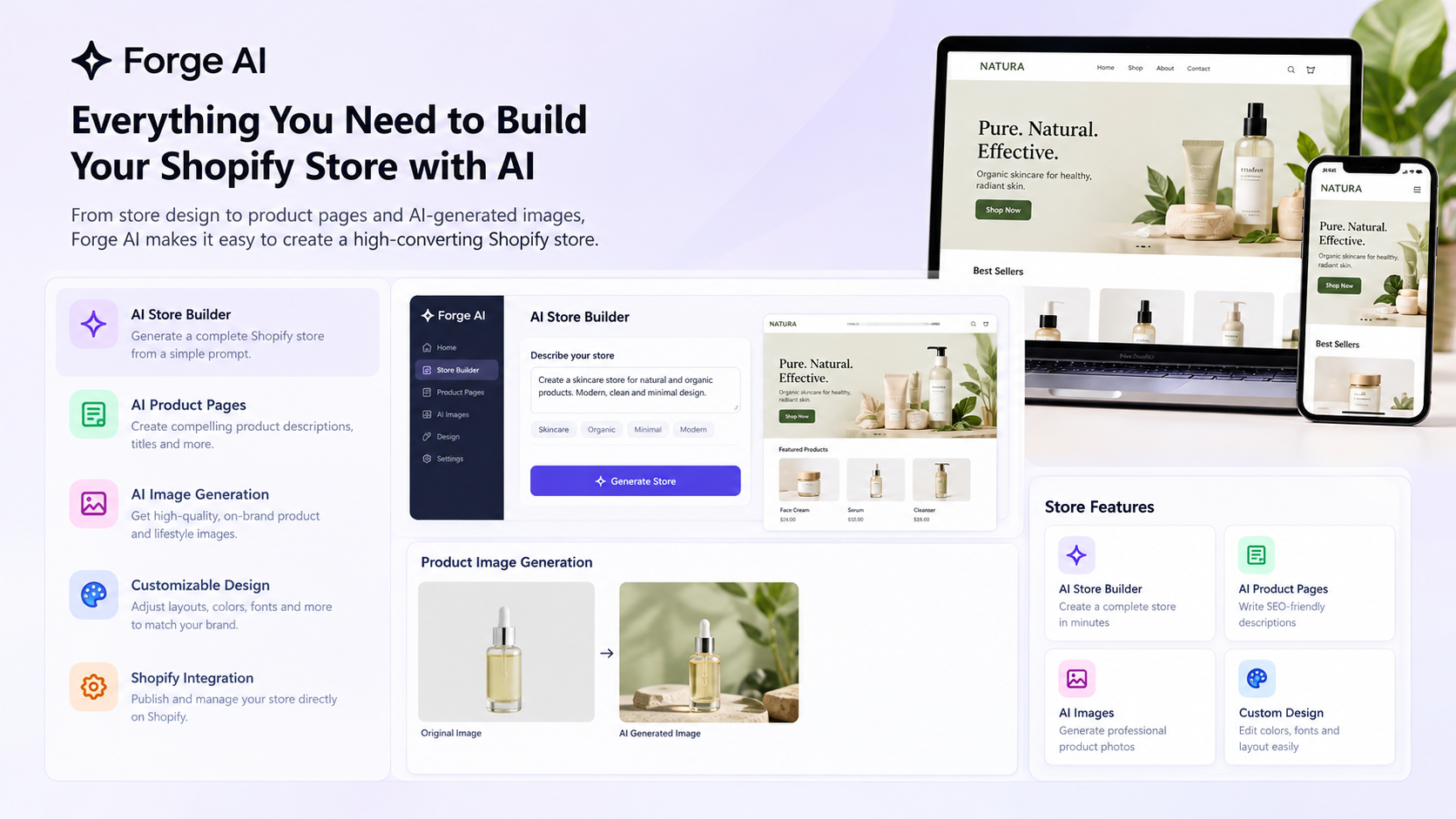
Ready to simplify your Shopify store creation process? Explore the Forge AI Shopify store builder and see whether its workflow matches your business needs.
Frequently Asked Questions
What is an AI Shopify store builder?
An AI Shopify store builder uses artificial intelligence to help create elements of an online store, such as layouts, product content, images, and page structures. The exact features vary by platform.
Can an AI Shopify store builder create a complete online store?
Some tools can generate most of the storefront from a prompt, while others focus on specific pages or content. Payment settings, shipping rules, product accuracy, and final checks may still require manual work.
Does an AI Shopify store builder improve Google rankings automatically?
No, AI can assist with creating and organizing content, but rankings are not guaranteed. Store owners must also consider useful content, technical SEO, competition, and the needs of their customers.