Finding winning products for a Shopify dropshipping store requires researching customer demand, analyzing competitors, checking supplier reliability, and calculating profit margins before launching. Store owners should prioritize products that solve a clear customer problem, offer realistic profit potential, and can be delivered reliably. Testing customer interest before increasing advertising spend helps reduce guesswork.
Finding a product that is guaranteed to sell is not the goal of product research. Before spending time and money, it's important to gather adequate information to make a better selection.
What Makes a Product Worth Selling Through Shopify Dropshipping?
A promising dropshipping product has a distinct market, definite benefits, a regular supply, and costs that leave room for profit. It should also be practical to ship and easy to explain through product images, demonstrations, and useful descriptions.
For example, a compact desk organizer may appeal to remote workers who want to reduce clutter. However, the idea becomes more promising only when research supports customer interest, competitor analysis reveals an opportunity, and supplier costs fit the intended selling price.
Shopify's product research guide recommends evaluating customer demand, competition, and product suitability before committing to an idea.
Before moving forward, assess each product against five factors:
- Demand: Are customers actively searching for or discussing the product?
- Customer value: Does it solve a recognizable problem?
- Competition: Can the store offer a meaningful difference?
- Profit potential: Do the numbers work after relevant costs?
- Supplier reliability: Can the product be delivered at the expected quality and speed?
How to Find Winning Products for a Shopify Dropshipping Store
Start With a Customer Problem, Not a Trending Product
Identifying a consumer group and learning about their needs is a good place to start. Instead of focusing solely on viral items, look into everyday inconveniences, common complaints, and requests for improved solutions.
Consider pet owners who travel with their dogs. They may need portable water bottles, seat covers, or travel organizers. These products are potential research candidates, not proven winners.
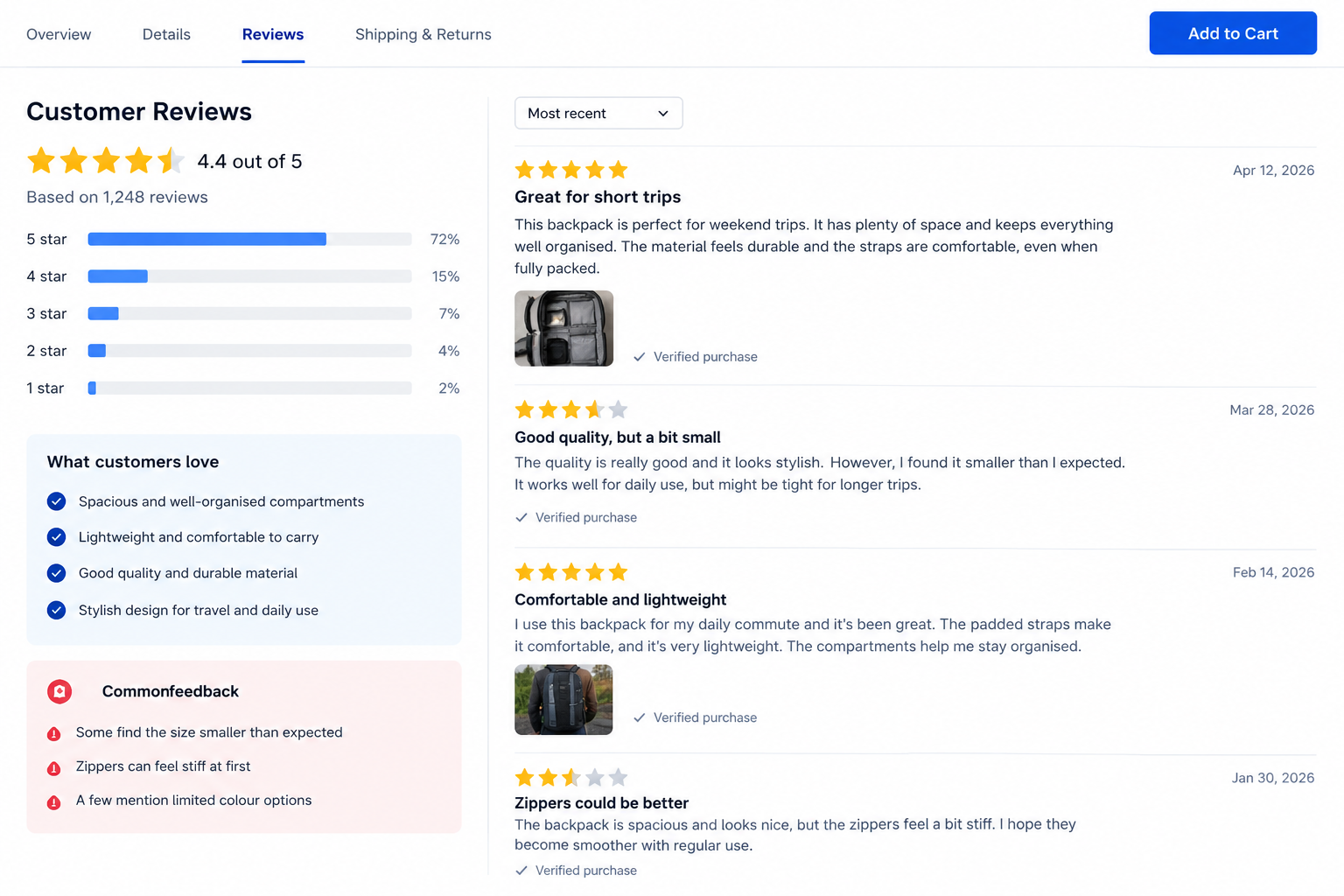
Examine comparable product reviews on marketplaces and merchant websites. Keep an eye out for recurring complaints regarding size, usability, durability, or missing features. These trends can show what consumers value and what current items might not offer.
Check Search Demand Before Building Your Store
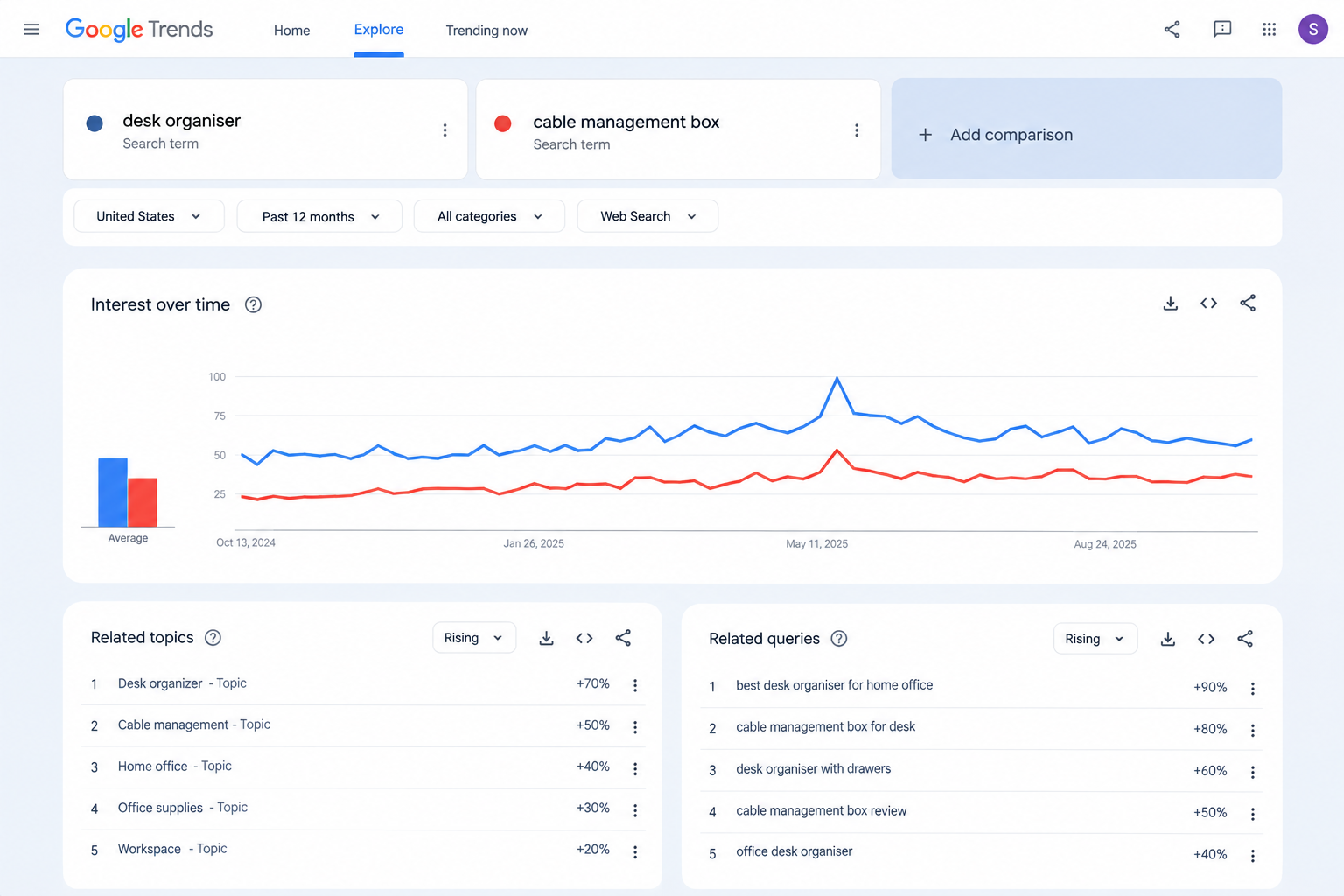
After you have a few ideas, find out if consumers are interested in those things. Comparing search interest across phrases, locations, and time periods is made easier with Google Trends.
For example, compare searches for “desk organizer" and “cable management box” in your target country. Examine whether interest is relatively consistent or mainly driven by a temporary spike. Then use keyword research tools to explore related searches and buying intent.
Customers' interest in a product does not guarantee that they will buy it. Before making a choice, consider trend data, marketplace listings, consumer feedback, competitor analysis, and supplier verifications.
Study Competitors to Find an Opportunity
After checking demand, examine how other stores present similar products. Compare product features, prices, delivery estimates, images, descriptions, return policies, and customer feedback.
Let's say a number of competitors offer desk organizers, but they don't give much information regarding their size. With precise dimensions, attractive product photos, and useful samples demonstrating how the organizer fits a workspace, a retailer could enhance the purchasing experience.
This does not mean every product in a competitive category should be avoided. Competition can indicate an established market, but a new store needs a clear reason for customers to consider its offer.
Calculate the Real Profit Before Choosing a Supplier
A product's selling price is not the same as its profit. Include supplier costs, shipping, payment processing, advertising, platform expenses, refunds, and other relevant costs when evaluating a product.
Consider this illustrative calculation:
You can copy this table directly into your blog or document.
| Item | Example Amount |
|---|---|
| Selling price | $35 |
| Supplier product cost | $10 |
| Shipping | $5 |
| Estimated payment and platform costs | $2 |
| Advertising cost per order | $8 |
| Estimated amount remaining | $10 |
Note: The estimated amount remaining is before other expenses, such as taxes, refunds, and unexpected costs.
The $10 remaining is an illustrative contribution before other overheads, taxes, refunds, and unexpected expenses. It is not a guaranteed profit figure. Actual costs depend on the supplier, market, product, and store.
Ask for supplier information, examine shipping guidelines, verify stock levels, and, if feasible, place an order for a sample. If a product's quality is uneven or its delivery is uncertain, it may still be inappropriate even if its margins appear good on paper.
Use an AI Shopify Store Builder to Explore Product Ideas
Create a store concept based on a product's target market, primary advantages, and brand aesthetic after it has passed the initial inspections. A product page should explain to customers what the product does, why it would be a good fit for their needs, and what they should know before making a purchase.
Forge AI is an AI-powered Shopify store builder that assists retailers in designing product pages and Shopify stores. After researching a product, a merchant can use an AI builder to explore how the product might be presented in a dedicated store.
Although AI-generated layouts can aid in concept visualization, they are unable to independently demonstrate product demand, supplier quality, or profitability.
Have a product idea worth exploring? Explore Forge AI to see how an AI Shopify store builder can help turn a store concept into a storefront design.
Test Customer Response Before Increasing Your Budget
Once a promising product has been chosen, develop a targeted product page and test consumer interest on a reasonable budget. Provide clear photographs, a precise description, clear delivery details, and responses to frequently asked inquiries by customers.
Keep tabs on product page visits, add-to-cart activity, checkout progress, purchases, advertising expenses, and customer reviews. These factors assist in determining whether the product's economics are still viable and where consumers lose interest.
For example, if visitors view a product but rarely add it to their carts, review the price, product explanation, images, and audience targeting before assuming the product itself is the problem.
Which Dropshipping Products Should You Avoid?
Not every popular item is appropriate for a dropshipping business. Certain products have short-term demand, intense price competition, untrustworthy suppliers, costly delivery, or quality problems that could result in complaints from customers.
Additional market research may be necessary for products with safety standards, prohibited materials, trademarks, or other rules.
Check supplier terms, delivery times, return policies, and other relevant product criteria before choosing a product. Don't base your purchases just on viral popularity.
How Can You Choose Your Next Winning Dropshipping Product?
Instead of depending just on one product, start with multiple concepts. Investigate customer problems, evaluate competitors, compare search interest, compute expenses, and verify supplier reliability. Shortlist products that meet your requirements, then test customer response before committing a larger budget.
There is no guaranteed formula for finding a winning product. A structured research process helps reduce guesswork and provides a clearer basis for deciding which products deserve further investment.
Ready to explore your product idea? Visit Forge AI to see how an AI Shopify store builder can help you develop a storefront around your chosen product and audience. Validate demand and supplier quality before launching or increasing advertising spend.
Frequently Asked Questions
What is the best way to find winning products for a Shopify dropshipping store?
Research customer needs, compare search demand, analyze competitors, calculate total costs, and verify supplier reliability before testing a product.
How can beginners find dropshipping products?
Beginners can start with a specific customer group, investigate common problems, compare product ideas, and shortlist options that meet their budget and delivery requirements.
Can AI help find winning dropshipping products?
AI can help develop product ideas and create storefronts or product pages. However, merchants still need to validate customer demand, product quality, supplier reliability, and profit potential.
Should a dropshipping product be trending to succeed?
No. Trends can reveal interest, but a product may also have seasonal demand or strong competition. Consistent research and customer validation are more useful than relying on popularity alone.