A well-designed Shopify product page helps customers understand a product, compare its benefits, and decide whether to buy it. Forge AI is an AI-powered Shopify store and page builder that generates product pages, written content, layouts, and product images from a prompt. It gives dropshippers and new merchants a means to make product pages without having to start from scratch with every design.
Simplifying product presentation, reducing laborious setup tasks, and preserving a consistent shopping experience are all made possible by using a Shopify product page builder. Here are five advantages of utilizing Forge AI and tips for merchants to maximize its features.
What Makes Forge AI a Useful Shopify Product Page Builder?
Writing descriptions, organizing sections, preparing photographs, and verifying the layout on mobile devices are all common tasks when creating a product page by hand. Time and focus are needed for each task, particularly when launching multiple products.
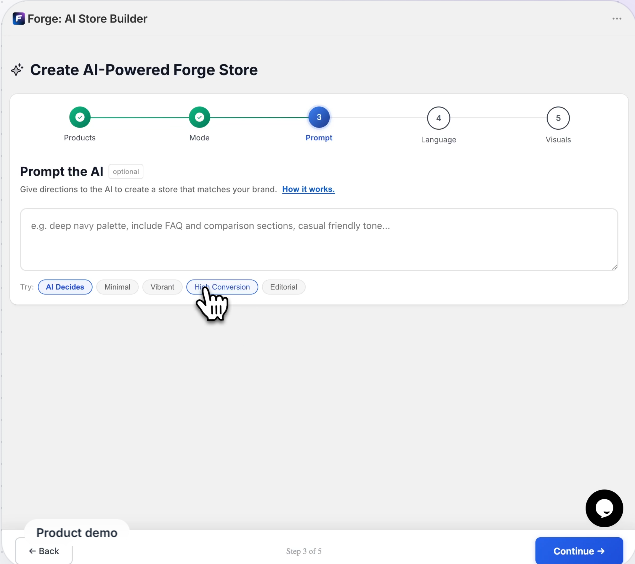
Forge AI brings several of these activities into one AI-powered workflow. Merchants can describe their store or product idea, generate an initial page, and review the result before publishing. The generated content still needs to be checked for accuracy, brand fit, and customer requirements.
1. Create Shopify Product Pages From a Single Prompt
For new Shopify merchants, creating a product page from scratch might be difficult. They must decide what information to include, how to arrange the content, and which design elements will communicate the product's value.
Forge AI generates a starting point from a written prompt. Depending on the selected workflow, this can include page structure, product copy, branding elements, and visual assets.
For example, a merchant launching an eco-friendly water bottle store could describe the target audience, product material, capacity, and intended use. The AI-generated page can then provide a foundation for presenting these details.
Instead of arranging every section manually, the merchant can focus on refining the page, checking product specifications, and ensuring the content reflects the actual item.
2. Present Product Benefits With Structured Page Sections
To make an informed purchase, customers require more information than just the product name and a picture. They might be interested in learning about the product's key attributes, useful advantages, usage guidelines, and answers to frequently asked questions.
Product page layouts with elements like feature grids, hero blocks, FAQs, and testimonials can be produced by Forge AI. These sections provide a starting structure for presenting information in a logical order.
Consider a skincare product page. A clear layout might introduce the product, explain its ingredients, describe how to use it, and answer questions about suitability and packaging. Customers can review the relevant details without searching through an unstructured block of text.
The crucial point is that while a clean layout facilitates the purchasing process, it does not ensure more sales. Product relevance, pricing, trust, and the quality of the information also influence purchasing decisions.
3. Generate Product Images and Visual Assets More Efficiently
Product photography affects consumers' perceptions of a product before they buy it. However, merchants managing a new store or testing several products may find it more difficult to prepare photos for multiple products.
With compatible features and plans, Forge AI provides AI-generated product images and banners, including 4K image production. This can serve as a foundation for developing graphic components that complement the general layout of a store.
For example, a home accessories merchant could use generated imagery to establish a consistent visual direction across product pages and promotional banners. This helps when building a store that needs more than one isolated product image.
Images produced by AI should still be compared to the actual things. Accurate information must be maintained on color, dimensions, packaging, included accessories, and other crucial data. Additionally, retailers should make sure that pictures don't imply features that the product doesn't have.
4. Support Shopify Product Page SEO and AI Search Visibility
Customers and search engines should be able to understand what is being sold from a product site. Descriptive titles, pertinent keywords, educational product descriptions, alt text for images, and a clear page structure are all helpful SEO components.
Forge AI promotes SEO-related features such as meta tags, structured data, sitemaps, image compression, and mobile-first layouts. These capabilities can help merchants establish a technical foundation, but the final implementation should be checked on the live store.
Product descriptions should include information on the product's genuine features, advantages, materials, and intended purposes in order to increase organic visibility. AI-generated copy should not rely on repetitive keywords or vague claims.
Shopify also recommends providing clear, detailed product information that helps AI platforms understand and match products to relevant searches. Read the official Shopify guide to optimizing product pages for AI.
For example, a backpack product page can include its capacity, dimensions, material, compartments, and suitable uses. These details are more useful than repeatedly inserting the phrase “best backpack” into the description.
5. Simplify Product Launches and Ongoing Store Management
The same page-building procedure is frequently required for merchants that test several products. It can take time to write copy, prepare images, organize sections, and verify mobile layouts for each product.
Forge AI facilitates the integration of relevant store-building processes and product page generation into a single workflow. Merchants should check the current pricing before selecting an option because the plan they choose will determine the product page restrictions and image-generation allowances.
This can make it simpler for dropshipping companies to create the first page for a new product and then analyze supplier details, pricing, client demand, and product quality.
However, automation should not replace product research or performance measurement. Merchants should monitor organic traffic, add-to-cart activity, conversion rate, and customer questions to identify where a page needs improvement.
Is Forge AI the Right Shopify Product Page Builder for Every Store?
Forge AI can be useful for merchants who want to generate product pages quickly and reduce repetitive design work. It may be particularly relevant to beginners, small ecommerce teams, and dropshippers managing several product ideas.
Where Can Merchants Start With Forge AI?
It takes more than just design to create a functional Shopify product page. A better consumer experience is a result of product accuracy, clear descriptions, useful photos, mobile usability, and search optimization.
Forge AI provides an AI-powered workflow for generating product pages, content, and visual assets, giving merchants a starting point they can refine for their brand.
Examine the features and available plans of Forge AI's Shopify store and page builder. Check the generated content, product details, links, photographs, and SEO settings before publishing to make sure the finished page is ready for customers.
Frequently Asked Questions
1. What is a Shopify product page builder?
A Shopify product page builder helps merchants create and organize product page layouts, content, and visual elements. AI-powered builders can also generate an initial design or copy from a prompt.
2. Can Forge AI generate Shopify product pages automatically?
Yes. Forge AI offers AI-generated Shopify product pages and related content. Merchants should review the generated information and make any necessary edits before publishing.
3. Does using an AI product page builder guarantee better SEO rankings?
No. An AI builder can help with page creation and SEO-related setup, but rankings depend on multiple factors, including content quality, technical performance, competition, and relevance to search intent.